
国光帮帮忙(全文在线阅读)>
国光帮帮忙The West’s ‘overcapacity’ narrative is economically illiterate: Josef Gregory Mahoney_我的网站
一 | 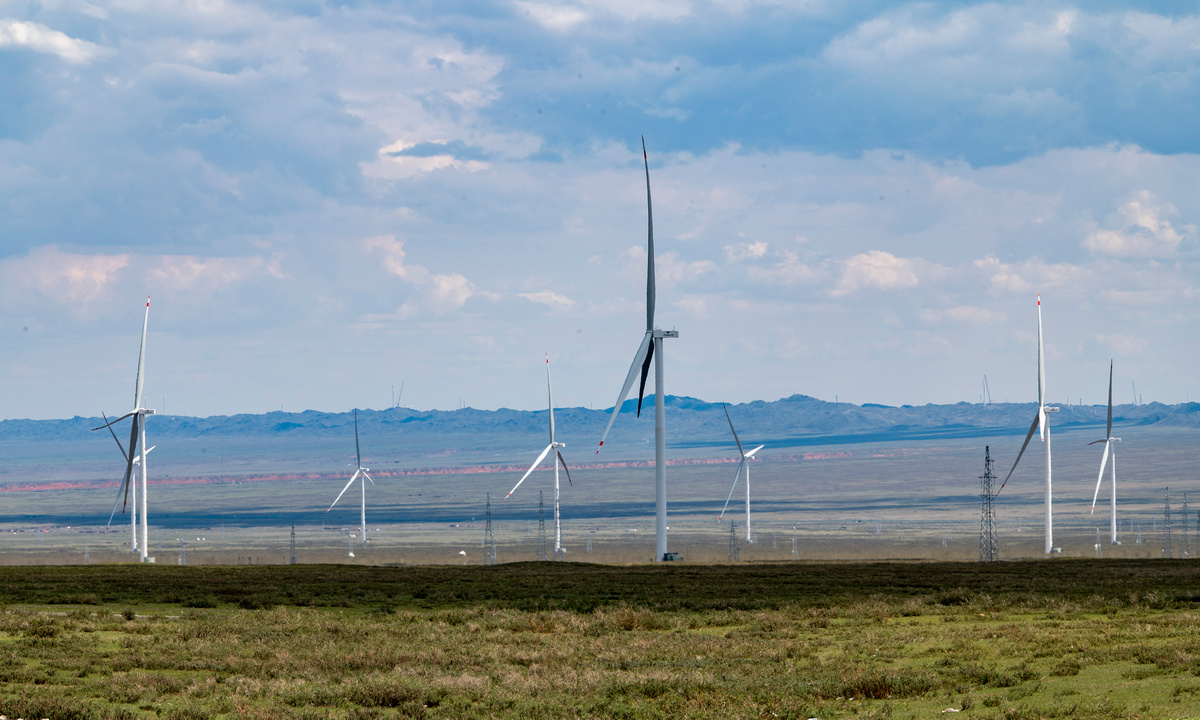 In economics, overcapacity is a dynamic and relative concept. Supply-demand balance is temporary, and imbalance is the norm. The Western narrative that equates the sheer scale of China's production capacity directly with "overcapacity" is, frankly, economically illiterate. It conflates size with pathology. Consider the math. China's manufacturing sector accounts for roughly 30 percent of global manufacturing value-added - a dominance unmatched since the post-war US. Yet this reflects not overcapacity but competitive capacity. The critics ignore that China's trade surplus in 2025 reached a record $1.2 trillion, roughly equivalent to the GDP of a top-20 economy like Saudi Arabia. They ignore that Chinese exports carry high import content - foreign value-added accounts for nearly half of gross export value - meaning China's capacity integrates global supply chains rather than displacing them. The judgment lacks rigor because it applies a static snapshot to a dynamic system. It assumes that if China produces more than it currently consumes domestically, the surplus is automatically "overcapacity." Nonsense. By that logic, Germany's persistent trade surplus in automobiles and machinery would constitute chronic overcapacity. It does not, because German capacity serves global demand. So does China's. The narrative isn't economics. It's politics dressed in economic jargon. Western critics attribute the price advantages of Chinese green technology products to "government subsidies" and "market distortion." This is a convenient story. It is also wrong. The global competitiveness of China's green technology industries stems from four interconnected factors: massive domestic market scale, decades of sustained infrastructure investment, a highly educated STEM workforce, and fierce intra-industry competition. China's NEV purchase-tax exemptions, extended through 2027, total approximately 520 billion yuan ($77.05 billion). Substantial? Yes. But causally linked to overcapacity? No. The causal chain critics imagine - subsidies → artificial competitiveness → overproduction - collapses under scrutiny. The EU's IPCEI battery programs allocated over 6 billion euros, plus EIB financing. The US CHIPS Act appropriated $54.2 billion for semiconductors, while the Inflation Reduction Act funnels hundreds of billions into clean energy. All major economies subsidize strategic industries. The difference is that China converted subsidies into systemic efficiency: its nominal lithium-ion cell capacity reached approximately 2.2 TWh by end-2023, driving global average battery pack prices down 20 percent year-on-year to $115 per kilowatt-hour in 2024. That is not distortion. That's innovation at scale. Chinese firms filed 20,081 European patent applications in 2024 - 10.1 percent of the total, with battery technology patents surging 79 percent year-on-year. Patents reflect innovation, not subsidy dependency. The causal link between subsidies and overcapacity is weak; the link between scale, innovation, and competitiveness is robust. Meanwhile, global demand for green and low-carbon transition is experiencing explosive growth. The International Energy Agency projects that renewable capacity additions must triple by 2030 to meet Paris Agreement targets. In this context, labeling China's wind, photovoltaic, and battery capacity as "overcapacity" is not merely wrong - it is dangerously counterproductive. In fact, China's capacity has played an indispensable role in advancing the global energy transition. Chinese solar module production costs have fallen roughly 90 percent over the past decade. Goldman Sachs Research notes that China manufactured approximately 86 percent of global solar modules, 80 percent of lithium-ion batteries, and 68 percent of electric vehicles in 2024. This is not overcapacity dumped on foreign markets; it is capacity the world desperately needs. The "overcapacity" label assumes a zero-sum game where Chinese production crowds out others. The reality is synergistic: Chinese capacity lowers global clean energy costs, enabling faster deployment worldwide. The "overcapacity" label holds only if one believes the world should slow decarbonization to protect less competitive producers and to empower those that deliberately employ "burn, baby, burn" tactics. That's industrial protectionism intersecting with brown imperialism, and it's disproportionately impacting the Global South, which is more vulnerable to climate breakdown, precisely when it's finally trying to shake off centuries of systemic Western exploitation and suppression. Furthermore, the disparity in how the West treats its own industrial policy versus China's is glaring. When the US funnels $52.7 billion through the CHIPS Act for semiconductors, or when the EU subsidizes Airbus, or when American agricultural subsidies distort global food markets, the silence from Western media is deafening. When China gains an edge in manufacturing, it faces media offensives and policy restrictions. This is not inconsistency. This is strategy. The underlying motivation is the "China threat" rubric - a framework that treats China's development itself as a danger to the Western-led order. Countries wagging their fingers at China do so not because China violates economic rules they themselves follow, but because China succeeds under rules they once wrote to their own advantage. These accusers possess their own national industrial policies and subsidies. They have long exploited historical and contemporary advantages against China and developing countries. They have not competed well, have not provided themselves with good governance, and have not invested adequately in their own infrastructure, education, and R&D. They have allowed their own leading industries to seek monopolistic positions detrimental not only to others but to their own consumers. Rather than reform themselves, they blame China. In these contexts, the cry of "China Shock 2.0" is the latest iteration of an old playbook: frame China's development as a threat to global stability rather than a contribution to global progress. The claim that China's advances in renewable energy and AI will send more serious shock waves than traditional manufacturing displacement is analytically flawed and politically motivated. First, the premise is false. China is not reducing the market share of developed countries through unfair means; it is outcompeting them through innovation, scale, and efficiency. According to Goldman Sachs Research, China's "new three" green technology sectors alone contributed around one percentage point to the country's 5.4 percent nominal export growth in 2025. This is competitive capacity serving global demand, not overcapacity dumped on foreign markets. Second, the "shock" framing ignores history. China maintained production and trade flows in 2020 while major Western economies crashed, providing essential goods to global markets, likely saving millions of lives while mitigating what would have been greater global economic harm. The "shock" is not to the global economy; it is to Western complacency. Third, the argument is self-contradictory. The critics want China to be simultaneously weak enough to dismiss and strong enough to fear. If China's high-tech development is genuinely formidable - so innovative and efficient that it threatens to displace developed economies - then it is delivering precisely the technological progress the world needs to meet climate goals. Restricting it through tariffs and barriers would harm global innovation, raise energy costs for developing countries, and slow decarbonization. The critics would be sacrificing the planet to protect their own complacency. "China Shock 2.0" is a rhetorical device to justify protectionism. It replaces engagement with containment, competition with confrontation. The world does not need another shock doctrine. It needs cooperation, investment, and the recognition that China's rise is not a threat but an opportunity - for green transition, for technological progress, for shared prosperity, and for a shared future. The author is a professor of politics and international relations and director of the Center for Ecological Civilization at East China Normal University in Shanghai. [email protected] 。 Kareena Kapoor Khan has been one of Bollywood’s most beloved actresses for over two decades. She made her debut in 2000 opposite Abhishek Bachchan in Refugee and has since captivated audiences with a wide range of performances. From romantic comedies to intense dramas, the actress has delivered roles that are not only memorable but have also become a part of Bollywood's pop culture. Here’s a look at some of her unmissable films that showcase her range and talent. In This Article Refugee (2000)Kabhi Khushi Kabhie Gham (2001)Chameli (2004)Omkara (2006)Chup Chup Ke (2006)Jab We Met (2007)Heroine (2012)Udta Punjab (2016)Crew (2023)Refugee (2000) Kareena Kapoor made her Bollywood debut with Refugee alongside Abhishek Bachchan. The film, directed by JP Dutta, tells the story of two young people caught in the complex world of human trafficking along the India-Pakistan border. The actress played Nazneen, a spirited and determined young woman who falls in love with Abhishek’s character, known as 'Refugee'. He helps illegal refugees from India and Pakistan cross the border through the Great Rann of Kutch. Even as a debutant, her performance was confident and graceful, and the actress won the Filmfare Award for Best Female Debut. Kabhi Khushi Kabhie Gham (2001) Karan Johar's Kabhi Khushi Kabhie Gham remains one of Kareena Kapoor’s most iconic films. She played the effervescent Pooja, also known as Poo. The actress' portrayal of the stylish and confident Poo became instantly memorable and is still celebrated today. The film featured an ensemble cast including Shah Rukh Khan, Amitabh Bachchan, Jaya Bachchan, Hrithik Roshan, and Kajol. Her comic timing, style, and energy made Poo a character that defined a generation of Bollywood fashion and pop culture. Chameli (2004) Chameli was a turning point in Kareena Kapoor's career, where she took on a much darker and unconventional role. She played Chameli, a street-smart sex worker, opposite Rahul Bose in a rain-soaked, single-night narrative. Her performance was intense and emotionally grounded, showcasing a depth rarely seen in her earlier work. The actress won the Special Award for Best Performance at the Filmfare Awards. Omkara (2006) Omkara is Vishal Bhardwaj’s adaptation of Shakespeare’s Othello. Kareena played Dolly, a loyal and innocent woman caught in a story of jealousy, betrayal, and tragedy. She starred alongside Ajay Devgn, Saif Ali Khan, Vivek Oberoi and Konkona Sen Sharma. Kareena delivered a nuanced performance that suited the dark and complex narrative. She won the Filmfare Award for Best Actress (Critics) for Omkara. Chup Chup Ke (2006) Chup Chup Ke is a comedy-drama directed by Priyadarshan, in which Kareena Kapoor plays Shruti Singh Chauhan, a young woman who is mute and becomes central to the film’s twists and comic moments. The story follows Jeetu (Shahid Kapoor), a debt‑ridden young man who, overwhelmed by financial pressure, decides to fake his own death to help his family claim insurance money. Rescued by two fishermen who mistakenly believe he is mute and wealthy, Jeetu begins pretending not to speak or hear to maintain the misunderstanding. This leads him to the household of Shruti and her affluent family. The film also stars Suniel Shetty, Neha Dhupia, Paresh Rawal, Rajpal Yadav and Om Puri among others. Jab We Met (2007) Jab We Met remains one of Kareena’s most beloved films. In the Imtiaz Ali directorial, she played Geet, a lively, talkative, and spirited young woman who meets a heartbroken businessman, Aditya (played by Shahid Kapoor), on a train journey. Their interaction changes the course of both their lives. Her charm, energy, and comic timing were effortless, and the character became iconic in Bollywood cinema. Kareena’s dialogues and looks from the film have become a part of the pop culture. Heroine (2012) Madhur Bhandarkar's Heroine saw Kareena play Mahi Arora, a once-successful actress whose personal life and career are on the decline. To bring her career back on track, she hires a public relations manager, who uses sensationalist tactics to keep Mahi in the spotlight. However, certain events and life-changing controversies led to her quitting the film industry. The film explores the pressure of stardom, the reality underneath the glamour and the emotional toll of living in a world where public image means everything. While it received mixed reviews, Kareena's performance was lauded by fans and critics. Heroine also starred Arjun Rampal, Randeep Hooda, Divya Dutta, Govind Namdev and Sanjay Suri among others. Udta Punjab (2016) In Udta Punjab, Kareena Kapoor took on a socially relevant role as Dr Preet Sahni, a compassionate doctor working to combat drug abuse in Punjab. The film, also starring Shahid Kapoor, Alia Bhatt, and Diljit Dosanjh, addressed a pressing societal issue. Crew (2023) Crew, directed by Rajesh A Krishnan, is a heist comedy where Kareena Kapoor Khan stars alongside Tabu and Kriti Sanon as three flight attendants who work for a struggling airline. When the trio accidentally uncovers a gold-smuggling operation on one of their flights, they decide to turn the tables and devise a dangerous plan to outsmart the criminals and secure the treasure. The film blends comedy, suspense, and teamwork. Kareena’s performance balances charm and comic timing with a sense of cleverness, making her a standout in this female-led ensemble. Also Read: Kareena Kapoor Khan Teases Meghna Gulzar With a Fun Travel Update From Daayra Shoot。 Current article:http://tovm.shuicengchongmingnouhuawang.bond/news/20260826_59315.html Published on:16:40:41 |
